
Birch House · Mooningwanekaaning
Our Story
Rooted in the land. Built by many hands. A place for gathering.

A Place That Was Gathering People Before It Was Finished
Long before the final pieces of bark were secured in place, Birch House was already fulfilling its purpose.
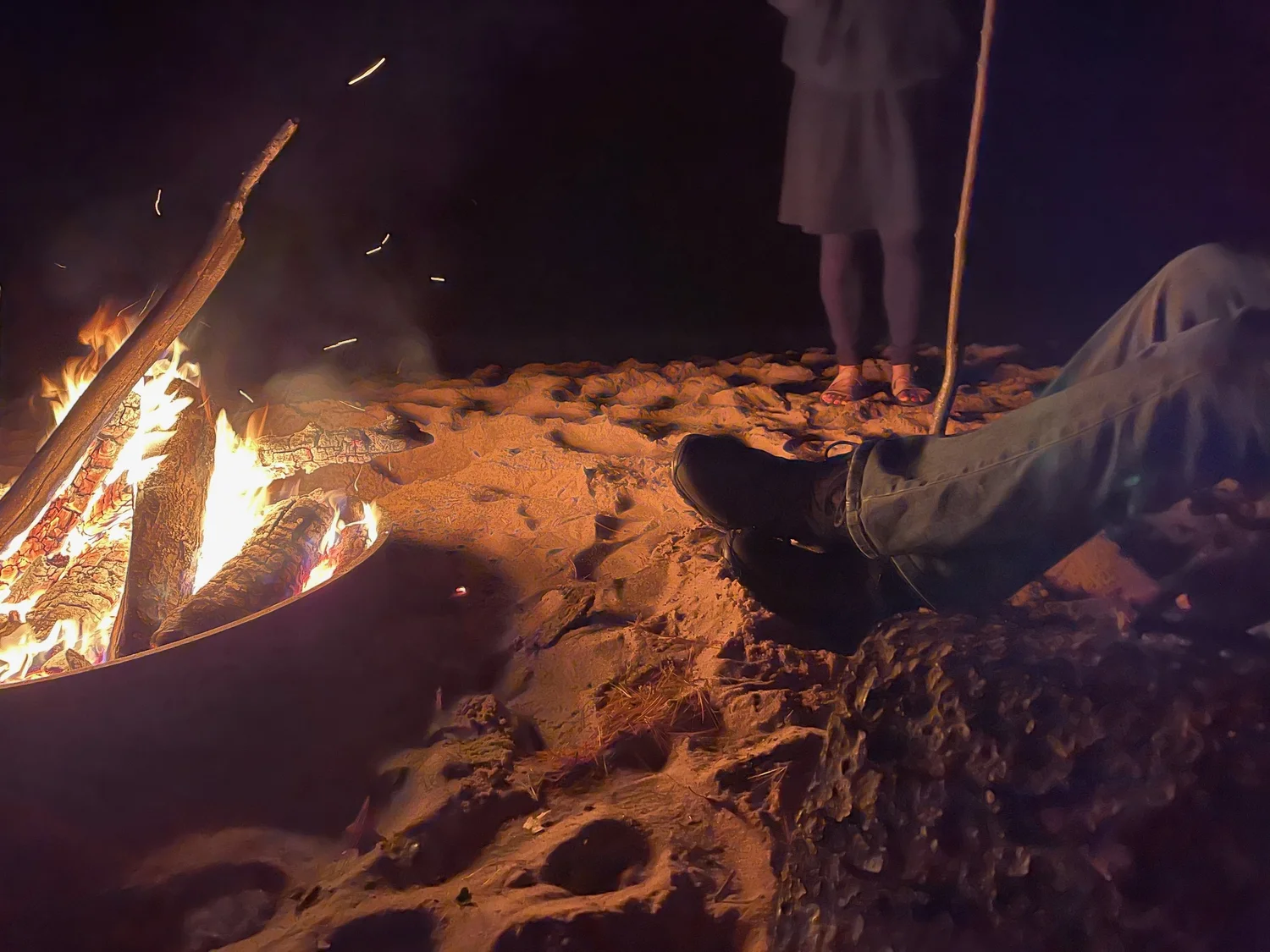
During the summer of 2025, while its walls and roof were still taking shape, the house welcomed conversations in Anishinaabemowin, visiting elders from Indigenous communities across the region, and neighbors gathering around the fire. It also became the setting for the first Tiny Wigwam Concert, an impromptu performance by Keith Secola, David Huckfelt, and Michael Laughing Fox Charette.
These early gatherings revealed something important about the house. Its purpose was never simply to be admired. It was meant to be used, shared, and brought to life by the people who gathered within it.
Music, friendship & community
Music Before the House Was Finished
During the summer of 2025, musicians Keith Secola, David Huckfelt, and Michael Laughing Fox Charette gathered inside the unfinished Birch House for an impromptu performance.
Envisioned by Keith Secola and David Huckfelt, this first Tiny Wigwam Concert captured something of the spirit of the building before construction was complete: a place where music, friendship, and community could come together around the fire.
The place
Madeline Island — A Place Where Time Feels Different
There is something about crossing the waters of Lake Superior to Madeline Island that makes the familiar world feel a little farther away.
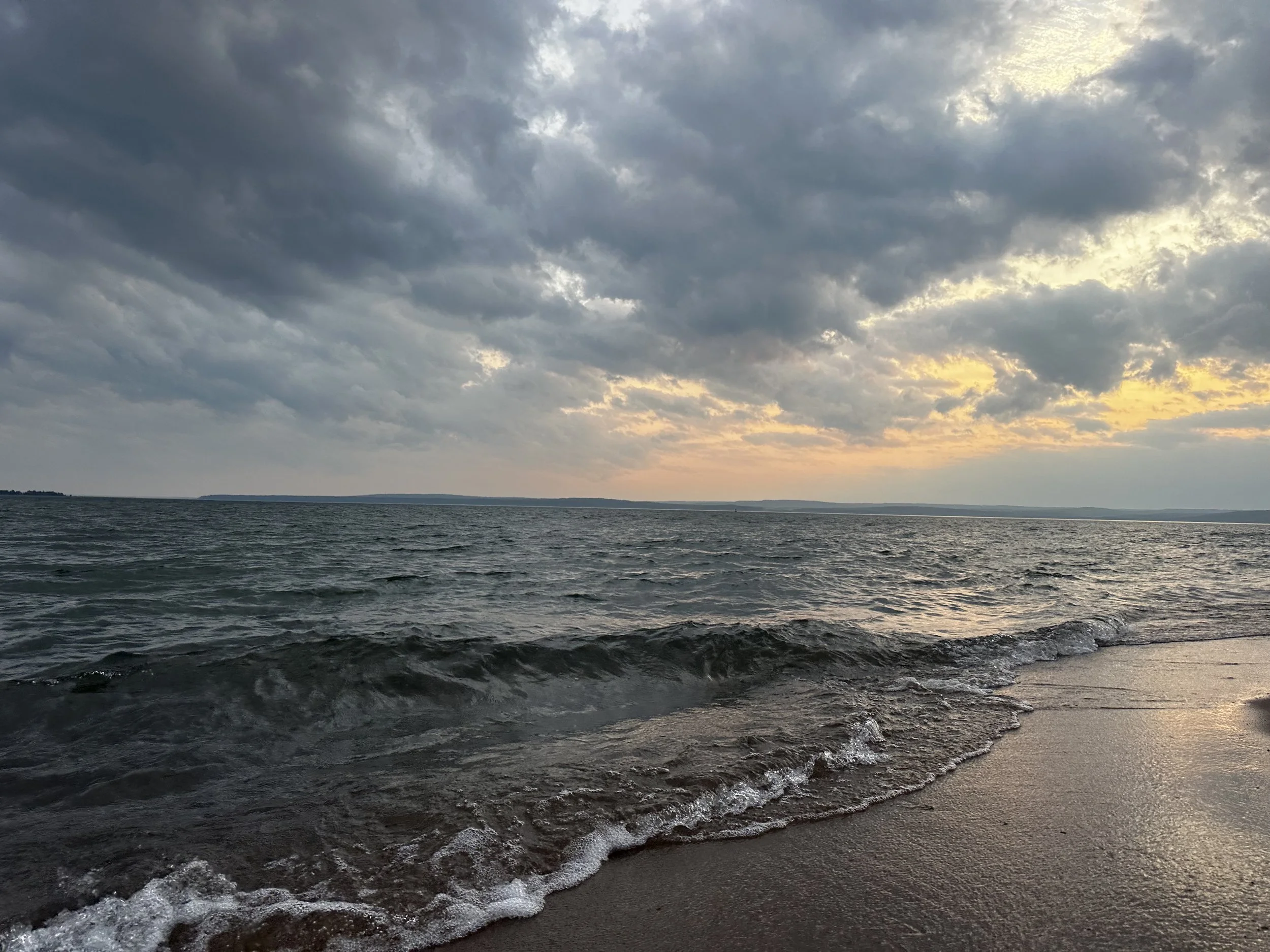
Known in Anishinaabemowin as Mooningwanekaaning, “the place of the golden-breasted flicker,” this remarkable island has long been an important homeland, gathering place, and crossroads for the Ojibwe people. For generations, its shores have connected communities through a vast network of waterways, travel, and trade.
Today, the island's forests, quiet beaches, sheltered bays, and sweeping views of Lake Superior continue to offer an extraordinary sense of place. Here, the rhythms of the natural world invite visitors to slow down, explore, and experience something beyond the ordinary.
People come to Madeline Island to discover somewhere different. At Birch House, we invite you to discover something different as well.
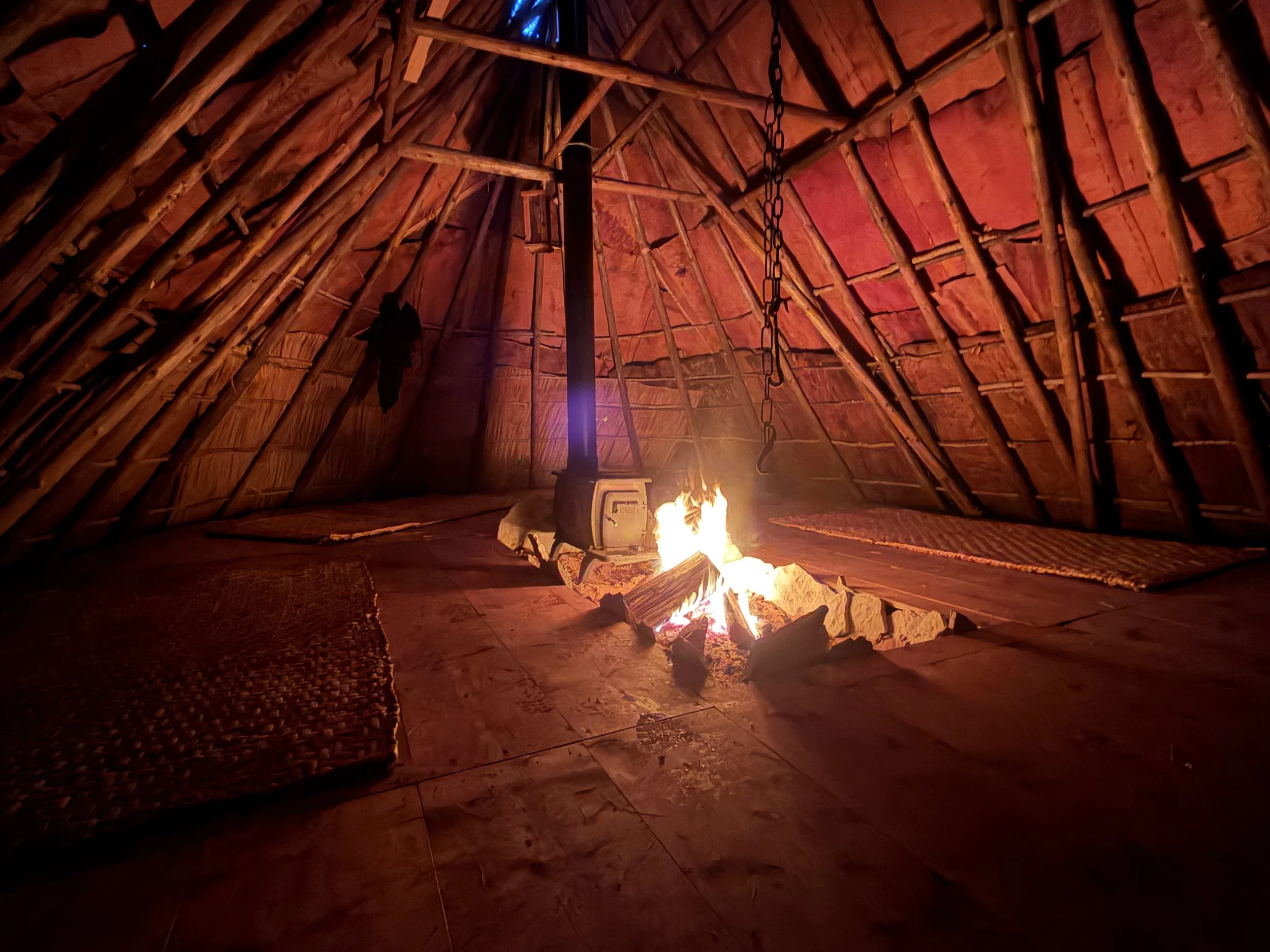
Step through the doorway into a house of bark and wood. Feel the warmth of the fire. Discover the beauty and ingenuity of traditional craftsmanship and the simple pleasures of gathering together.
A journey to the island becomes an invitation to step through time—into a place where history, nature, and human connection come together.
Plan Your Visit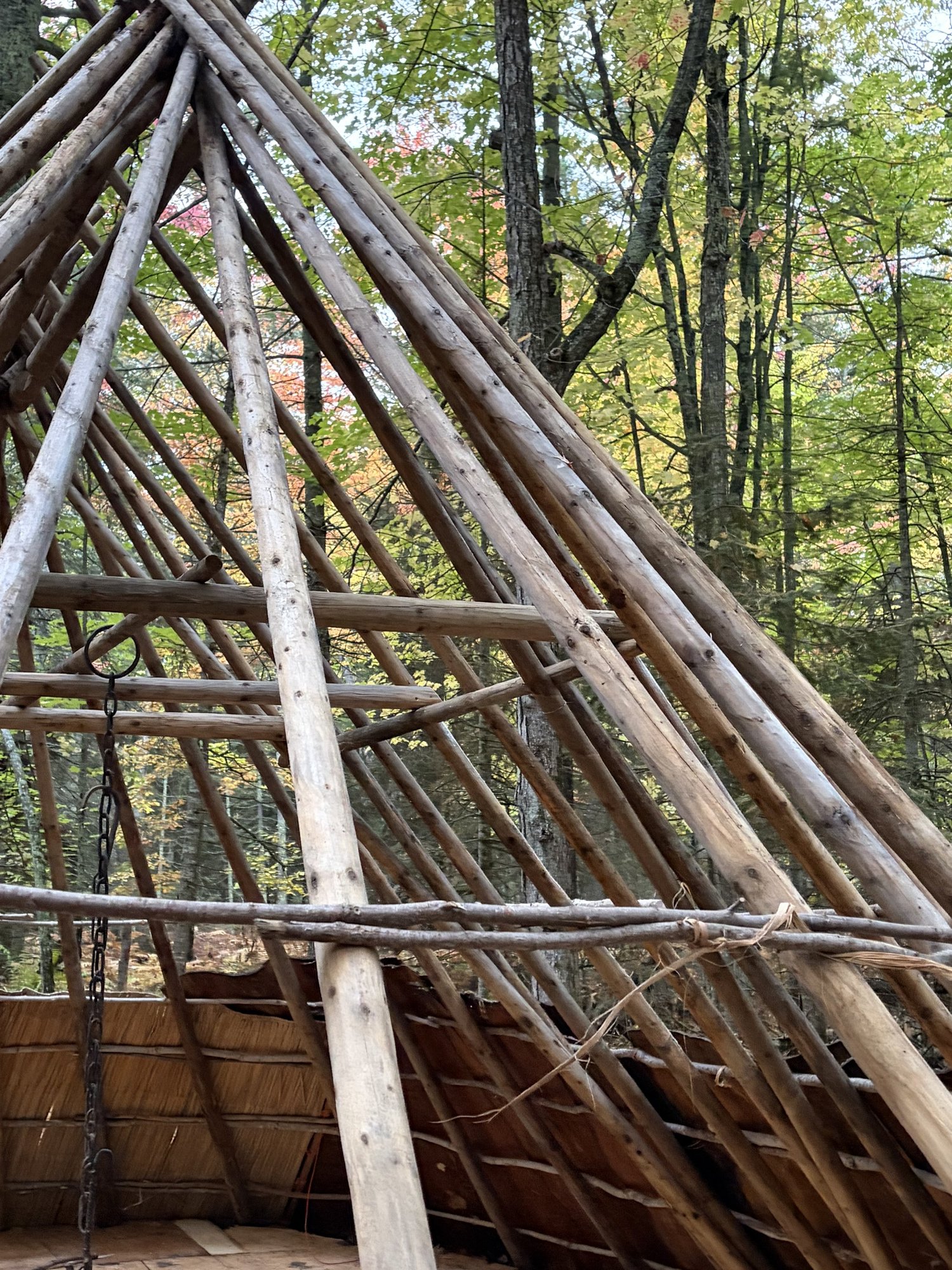
Bark, wood & ingenuity
An Architecture Rooted in the Great Lakes
Birch House draws upon a form of architecture with roots reaching back thousands of years in the northern Great Lakes and Canadian Shield. Bark-covered homes like this were an enduring part of life on Mooningwanekaaning (Madeline Island), built from the materials of the surrounding forests and adapted to the changing seasons.
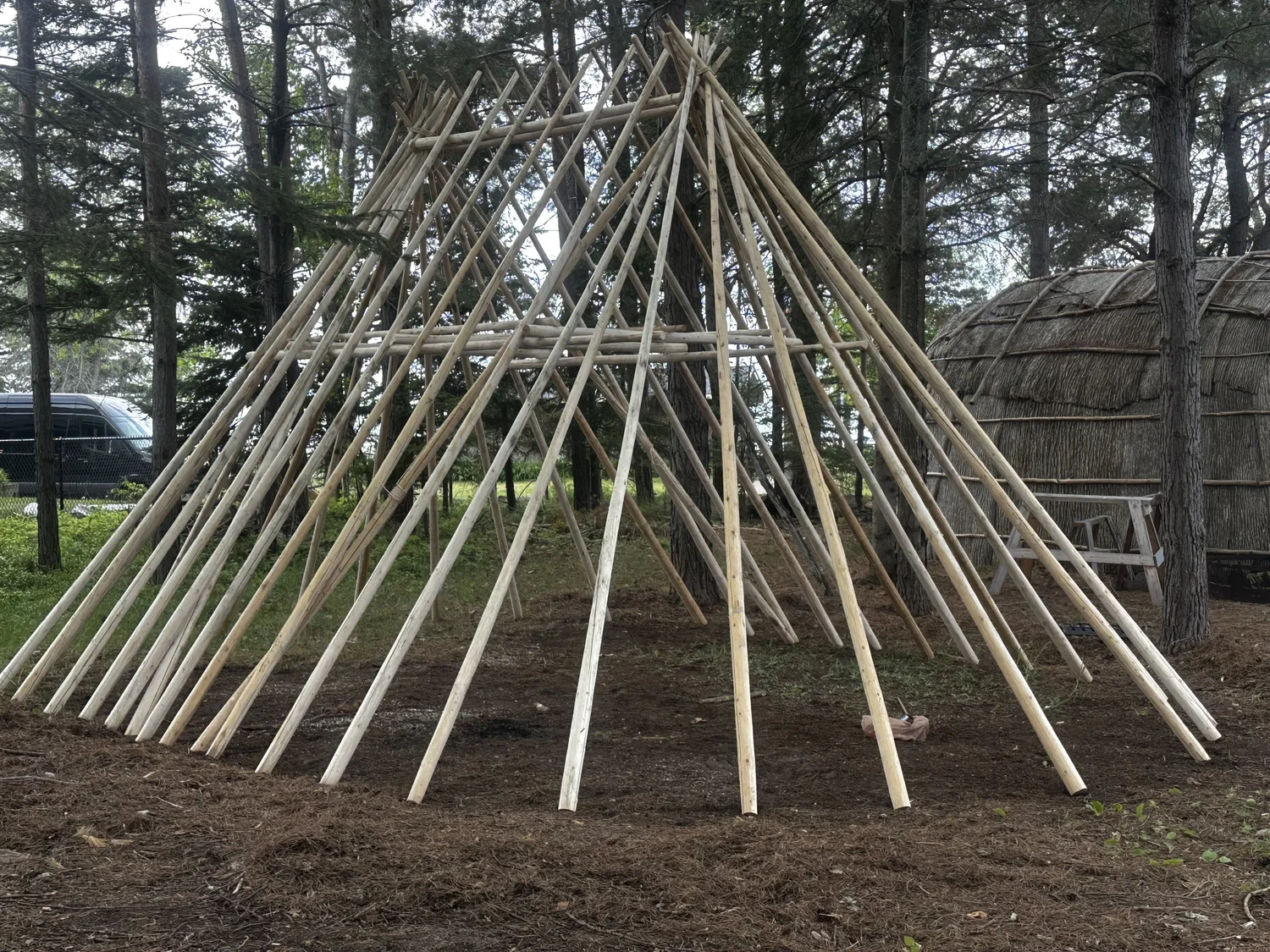
The design reflects an extraordinary understanding of the land. A framework of spruce poles and ironwood saplings supports large, lightweight sheets of birch bark. Historically, the framework could remain in place while the bark coverings—known as wiigwaasi-apaakwewin—were rolled and transported by canoe.
It is an architecture shaped by mobility, resourcefulness, and an intimate knowledge of the natural world.
Materials & shared work
Made of the Forest, Built by Many Hands
Nearly every part of Birch House comes from the forests and wetlands of the region.
Spruce and ironwood form the frame. Birch and elm bark provide shelter. Basswood inner bark is used to lash the framework and sew the roofing panels. Thick mats of cattails insulate the lower walls, while red pine gum seals small openings against the weather.
These materials were gathered with care through collaborative harvesting efforts involving Indigenous knowledge holders, friends, and community members.
Construction unfolded during the summers and fall of 2025 and 2026. Along the way, many Indigenous and non-Indigenous hands contributed to harvesting, preparing materials, building, teaching, and sharing knowledge.
Birch House stands today because of these collective efforts. We are deeply grateful to everyone who gave their time, skill, knowledge, encouragement, and care.


Warmth, nourishment & connection
A Living House
Birch House is not intended to be a relic of the past.
It is a fully functioning, four-season home, built to demonstrate the continuing relevance of land-based knowledge and sustainable construction.
A stone-lined central fire provides warmth, light, and a place to cook. A small woodstove keeps the house comfortable through long winter nights. Above the gathering space, a built-in rack serves for cooking and drying foods and plants.
Handwoven mats of bulrush and cedar bark create comfortable places to sit, while traditionally tanned bison robes offer additional warmth.
Within these walls, time-honored materials and techniques continue to serve the same essential human needs: shelter, nourishment, warmth, and connection.
A quieter setting
From the Village to the Forest
Birch House was first constructed at Flicker House, a shared Indigenous nonprofit space in downtown La Pointe operated by Native American Educational Technologies.
Building in the village made it possible for community members to observe, participate, ask questions, and share in the process. The construction itself became an opportunity for learning and connection.
In the fall of 2026, Birch House was carefully relocated to its present setting, nestled among the trees.
The move was intentional. Rather than becoming a busy roadside attraction, the house now rests in a quiet forest setting more closely suited to its purpose—a place where people can slow down, gather around a fire, and experience the natural world with greater attention.
The people behind the house
With Gratitude
Birch House came into being through the generosity, knowledge, and hard work of many people.
We are especially grateful to the Indigenous knowledge holders and community members who shared their experience in harvesting and preparing traditional materials, and to the many friends and neighbors who contributed their labor, skills, and encouragement throughout the building process.
We also acknowledge Native American Educational Technologies and the community surrounding Flicker House for helping make the original construction site a place of shared learning and participation.
This house reflects the contributions of many hands, and we carry deep appreciation for everyone who helped bring it into being.
A Place to Share
Birch House was created to honor the enduring knowledge of this region, demonstrate the possibilities of sustainable building, and provide a meaningful space for people to come together.
We are grateful to have Birch House as a resource for our island community—a place where the knowledge and craftsmanship of this region can be experienced, appreciated, and carried forward. Our hope is that the house will continue to welcome people around its fire, fostering friendship, learning, creativity, and a deeper connection to the land and to one another for many years to come.
Experience Birch House
Discover our private experiences, seasonal gatherings, and opportunities to spend time in this remarkable place.
Explore Our ExperiencesExplore GatheringsAlongside private visits centered on tea, fire, and craftsmanship, we welcome guest educators, artists, and knowledge holders who bring their own perspectives and teachings to special programs.
Birch House is a privately operated gathering place and a DBA of Amikwag LLC. Neither the business nor its founder represents or speaks on behalf of any Tribal Nation. Guest educators guide their own program content and speak from their own knowledge and experience.