
Birch House · Mooningwanekaaning
Traditional Hide Tanning Camp
Five Days of Traditional Skills, Indigenous Knowledge & Community
Birch House — Mooningwanekaaning (Madeline Island), Wisconsin
Optional arrival for overnight guests: Tuesday, December 1, after 3 PM

A gathering of skills and community
Join us for a special, one-time, five-day gathering of immersive, hands-on learning in the winter forests of Madeline Island.
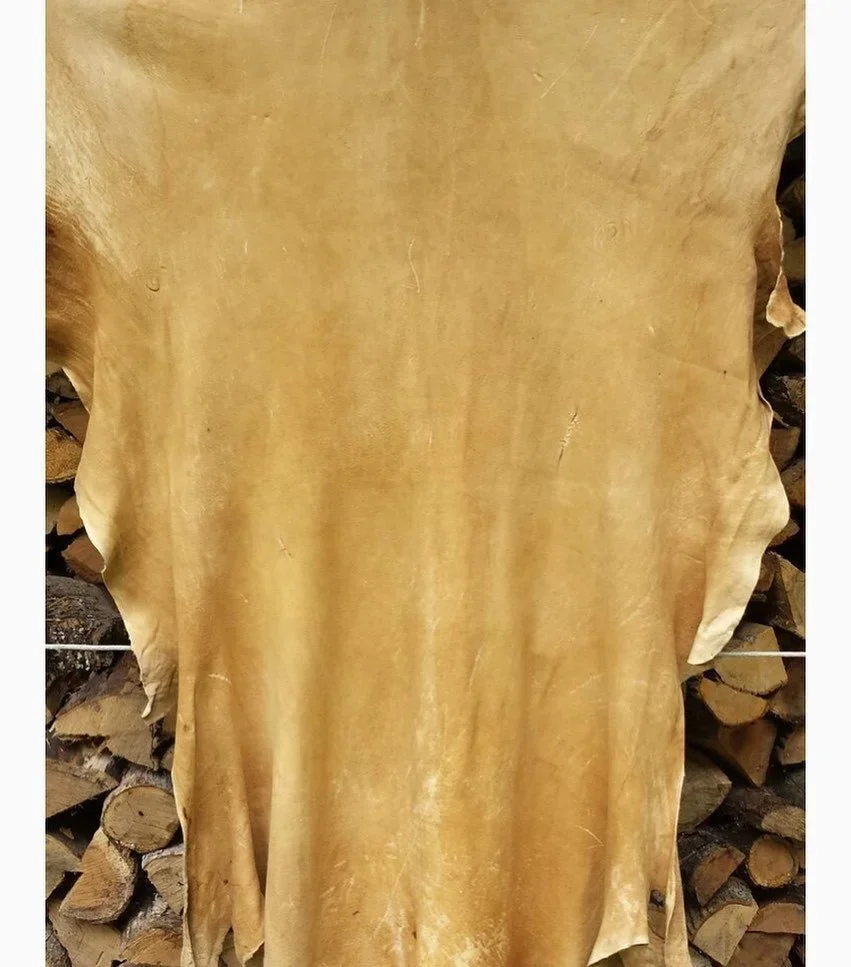
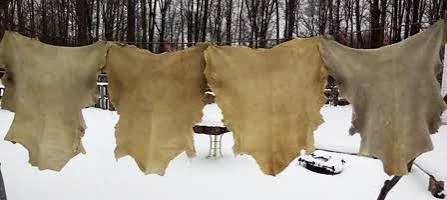
Together we will explore our relationships with Waawaashkeshi (deer), learning to transform raw deer hides into soft, smoked buckskin while practicing whole-animal processing, traditional tanning and hide smoking, food preservation, and the use of natural materials. Cultural conversations and shared work connect practical skills with community learning.
Each day begins with fireside conversations, followed by demonstrations, individual projects, and shared work.
What participants will learn
- Deer skinning, quartering, butchering, and preparing sinew and other materials
- Fleshing, wood ash bucking, graining, braining, softening, and smoking deer hides
- Traditional and contemporary tools, flint-tool butchering, and sinew sewing
- Tallow rendering, bone broth, pressure canning venison, venison drying, and hide glue


Meet the instructors
Kevin Finney
Deer processing, brain tanning, traditional tools, and natural materials.
Mike Wiggins — Bad River Ojibwe
Fireside conversations, cultural relationships with deer, and hands-on learning.
Kaesha Baloch
Tallow rendering, bone broth, pressure canning, and the traditional foods program.
Special Guest: Ivan Curry — Saginaw Chippewa descendant
Ancient butchering techniques using flint tools on Wednesday morning.
Five-day agenda
Optional arrival is Tuesday, December 1. The five-day camp runs Wednesday through Sunday. Expand each day to view the schedule.
Tuesday, December 1 — Arrival
- After 3 PM: Overnight guest check-in
- Evening: Welcome meal and visiting
Wednesday, December 2 — Deer Processing
- 7:30 AM: Breakfast
- 8:30 AM: Introductions and fireside discussion with Mike Wiggins
- 9:30 AM: Deer skinning, quartering, butchering, sinew, leg skins, and hooves
- Mid-morning: Flint-tool butchering demonstration with Ivan Curry
- 12:30 PM: Lunch
- 1:30 PM: Continued deer processing
- 3 PM: Tallow rendering and bone broth
- 5:30 PM: Dinner
- 6:30–7:30 PM: Pressure canning venison
Thursday, December 3 — Fleshing and Hide Preparation
- 7:30 AM: Breakfast
- 8:30 AM: Introduction to brain tanning
- 9:30 AM: Fleshing with traditional bone and contemporary tools
- 12:30 PM: Lunch
- 1:30 PM: Individual hide fleshing
- 4 PM: Wood ash bucking solution
- 5:30 PM: Dinner
- 6:30–7:30 PM: Traditional venison drying
Friday, December 4 — Graining and Braining
- 7:30 AM: Breakfast
- 8:30 AM: Fireside discussion
- 9:30 AM: Bucking solution and hide preparation
- 10 AM: Graining demonstration
- 10:30 AM: Individual graining
- Noon: Lunch
- 1 PM: Continued graining
- 2:30 PM: Rinsing, neutralizing, and wringing
- 3:30 PM: Preparing brains for tanning
- 4:30 PM: Braining and framing hides
- 6 PM: Dinner
- 7–8 PM: Making tallow products
Saturday, December 5 — Softening and Traditional Materials
- 7:30 AM: Breakfast
- 8:30 AM: Fireside discussion
- 9:30 AM: Re-braining and wringing
- 10:30 AM: Softening and sinew sewing
- 11 AM: Individual hide softening
- Noon: Lunch
- 1 PM: Continued softening
- 4:30 PM: Making hide glue
- 6 PM: Dinner
Sunday, December 6 — Smoking and Closing
- 7:30 AM: Breakfast
- 8:30 AM: Fireside discussion
- 9:30 AM: Preparing smoking materials
- 10 AM: Preparing hides
- 11 AM: Traditional hide-smoking methods and setup
- Noon: Lunch
- 1 PM: Smoking hides
- 4 PM: Closing discussion
The schedule may change depending on weather, hide conditions, and participant progress.
What participants will take home
Participants will work toward completing:
- A traditionally smoked deer hide
- Prepared deer sinew
- A jar of preserved venison
- A handmade tallow product
- Samples of traditional preserved foods
Finished hides are a goal, not a guarantee. Hide completion depends on processing conditions and individual progress. Take-home foods and materials are subject to availability and safe preparation.
Traditional foods
Kaesha Baloch will prepare an optional traditional foods meal program featuring wild game, wild-caught fish, wild rice, squash, handmade hominy soup, and seasonal ingredients.
Full meal package: $325. Includes breakfasts, lunches, and dinners during the five instructional days, plus the Tuesday arrival meal. Optional for all participants. Please share dietary restrictions in advance. Menus depend on ingredient availability and applicable food-service requirements.
Staying at Birch House
Overnight lodging is available to all twelve registered camp participants. Community registration includes lodging; each of the eight public registrants may add lodging for $200 for the entire camp.
Overnight Accommodations
Overnight accommodations are available inside Birch House for participants attending Traditional Hide Tanning Camp.
The bark house is a traditional communal gathering structure, approximately 22 feet long and 16 feet wide, heated by a woodstove and open fire.
Community registration includes overnight accommodations. Public participants may add overnight accommodations for $200 for the entire camp.
Lodging is communal, with shared sleeping space rather than individual bedrooms. Participants should be prepared for a rustic winter camp environment.
Bring a camping or sleeping mat, warm bedding or a sleeping bag, and a pillow. Additional information about sleeping arrangements, recommended equipment, and available facilities will be provided before the gathering.
Heating, comfort, and accessibility
The lodge is heated with a wood stove and an open fire. It becomes toasty warm and cozy during winter gatherings, but guests should expect a real wood-fire environment, including occasional smoke, ash, and changing temperatures.
This setting is not ideal for people with asthma, respiratory conditions, or sensitivities to wood smoke. Please consider whether the environment is suitable for your needs before reserving overnight lodging.
Camp work is physically demanding and includes sharp tools, animal materials, fires, wood smoke, and winter conditions. Please contact us in advance about any accessibility, respiratory, or other accommodation needs.
Bathrooms, showers, and everyday comforts
Participants may use an indoor toilet, sink, and shower in the private home on the Birch House property. There is also a separate outdoor composting toilet and shelter near the bark house for convenient use during camp activities.
The indoor facilities are in a private residence rather than inside the lodge; access arrangements and shared-use guidelines will be explained before arrival.
Wi-Fi, charging, and workspace
Although this is an immersive, hands-on retreat, we understand that some participants may need to work, attend an online class, join a virtual meeting, or remain connected with family. Cell phone signal is available on site. Participants will also have opportunities to charge electronics and access Wi-Fi in the private residence on the property.
A desk, monitor, and front-room workspace in the residence may be reserved for work sessions, online classes, or virtual meetings. Use of these spaces will be arranged through a sign-up system so participants can have appropriate time and privacy while respecting the household.
A follow-up email closer to the camp will include a survey about connectivity and workspace needs, instructions for scheduling, and details about hours and access. These amenities are shared and scheduled rather than continuously available private office facilities.
Other lodging options on Madeline Island
Participants who prefer a private bedroom, a smoke-free sleeping environment, or additional amenities may arrange their own accommodation elsewhere on the island. Availability in early December varies; contact hosts directly to confirm winter openings, minimum stays, and transportation to Birch House.
- The Inn on Madeline Island — winter lodging and vacation rentals
- Airbnb — Madeline Island search
- Madeline Island Vacations — island rentals
- La Pointe Lodging — local rental options
- Madeline Island Chamber of Commerce — island lodging directory
Confirm individual property availability directly. Mainland lodging in Bayfield is another possibility, but winter ferry schedules can make daily commuting impractical.
Wood-fired sauna
Access to the wood-fired sauna is included in retreat tuition. Bring a swimsuit, towels, and suitable slip-on footwear.
Tuition and optional additions
Standard tuition
Instruction, one deer hide, shared tools, instructional supplies, and sauna access.
Optional traditional foods meal package
$325Optional Birch House lodging — available to all eight public registrants
$200Optional complete personal tanning tool kit
Shared instructional tools are included in tuition.
Registration and payment arrangements are being finalized. No payments are currently being accepted through this page.
What to bring
- Warm work clothes that may become stained with blood, fat, brains, ash, and smoke
- Waterproof outerwear and boots with traction; warm hat, extra socks, warm and work gloves, extra layers, and spare dry clothes
- Personal care items, personal medications, and a flashlight or headlamp
- A portable camp chair and water bottle
- Swimsuit, towels, and sandals or slip-on shoes for the sauna
- Warm bedding or a sleeping bag, a sleeping mat, a pillow, and sleeping clothes for overnight guests
- Notebook, laptop, chargers, and headphones if you anticipate using the shared Wi-Fi or workspace
Hides are provided. Participants may bring their own deer hide by prior arrangement.
Getting to Madeline Island
Travel to Bayfield, Wisconsin, and board the Madeline Island Ferry for La Pointe. The Bayfield terminal is at 20 Washington Avenue, Bayfield, WI 54814. Passenger and ordinary vehicle boarding is generally first-come, first-served. Allow extra time, especially during winter weather.
Ferry schedules may change with weather and ice; verify the current timetable before departure. If arriving without a vehicle, arrange transport from the La Pointe landing to Birch House in advance.
Ferry schedule · Ferry rates
Ferry telephone: 715-747-2051
Registration, Payments & Cancellation Policy
Registration may be paid in full or with a $300 initial payment. The remaining balance is due November 22, 2026.
Cancellation charges will never exceed the amount already paid.
Review the Hide Camp cancellation, refund and payment policy.
Registration and payment options
Pay the complete registration amount, including selected lodging and optional additions, or pay $300 initially with the entire remaining balance due November 22, 2026. Registrations after November 22 require full payment at booking.
If a balance is overdue, Birch House will contact the participant by email. A grace period extends through November 25, 2026; registration and confirmed lodging remain held, and no late-payment fee is charged. Any unresolved cancellation requires staff review and final written notice.
Cancellation and refunds
Please contact Birch House in writing to cancel. Through November 2, tuition payments are refunded less a $100 administrative and preparation fee, limited to amounts paid. November 3–17, Birch House retains up to 50% of applicable tuition from payments already received and refunds the excess. From November 18, tuition payments received are nonrefundable, subject to applicable law and approved exceptions. The $300 initial payment is applied toward tuition, not a separate nonrefundable fee. Cancellation charges will never exceed the amount already paid. An unpaid balance will not be automatically charged after cancellation is accepted, and future payment requests must be canceled.
Lodging and add-on refunds
The optional meal package is $325 and the toolkit is $420. Refund deductions are limited to actual, documented, nonrecoverable costs. Birch House will make reasonable efforts to minimize those costs. Deductions cannot exceed payments received for the canceled option, and cancellation creates no additional charges.
If Birch House cancels the entire camp, all amounts paid for camp, lodging and optional additions will be refunded. Confirmed lodging remains held through the November 25 grace period. Public lodging costs $200 for the full camp and is refundable when canceled at least fifteen days before camp or when Birch House fills the released space. Otherwise lodging payments are nonrefundable, subject to applicable law and approved exceptions. Community lodging is included without a separate charge.
Read the complete camp cancellation and add-on refund policy.
Participant safety and agreements
Camp involves sharp tools, animal hides and biological materials, physical work, winter weather, fire, woodstove heat, smoke, and communal lodging where selected. Participation is voluntary. Follow instructor safety directions and discuss accommodation requests in advance. Any required individual participant agreement will be provided separately through an approved process; this information is not a liability release.
Amikwag LLC, doing business as Birch House.
Registration and contact information
Registration is open. Pay in full when registering, or reserve your place with a $300 initial payment. The remaining balance is due November 22, 2026.
Register for Hide CampThis is a physically demanding outdoor workshop involving sharp tools, raw animal materials, smoke, fire, and December weather.
To inquire about registration, lodging, meals, or accessibility, contact Kaesha Baloch (Kay-sha):
contact@visitbirchhouse.com
651-280-7063
VisitBirchHouse.com
Registered participants will receive a follow-up email closer to the event with a detailed arrival guide, facilities information, a dietary and accessibility survey, and the sign-up process for Wi-Fi, charging, and private-residence workspace use.
← Return to Gatherings